The first two authors are co-first authors.
This article is part of a longitudinal series on voluntary assisted dying.
Voluntary assisted dying (VAD) was enacted in Queensland in 2023 and provides an additional end-of-life option for eligible individuals who have a terminal illness, are suffering intolerably, and dying.1,2 The VAD process in Queensland is highly regulated and involves medical practitioners, such as general practitioners (GPs), who are required to respond, and in some instances, authorised to provide care for individuals that request VAD.1 The role of a GP in Queensland may include: the initiation of a discussion regarding VAD; providing information; receiving a first request; acting as an authorised VAD practitioner; and/or certifying the death of a person who has used a VAD substance.1 Although Queensland GPs have a legal right to refuse to act on such roles, when a person seeks assistance or information regarding VAD, all Queensland GPs are legally required to provide information about a health provider or service that is able to assist with such a request.1
In Queensland, GPs are commonly the first point of contact for patients requesting VAD and play an important role in the planning and provision of end-of-life care.3,4 Consequently, Queensland GPs must be well educated on the legislation and related professional obligations to ensure their patients receive accurate information on VAD to help inform decision making and end-of-life planning. However, GPs report a lack of confidence when responding to patients seeking VAD, despite considering this as an important competency.5 Emerging literature across Australian VAD jurisdictions shows there is indeed confusion, misinformation, and lack of knowledge surrounding VAD legislation nationally.6,7 These findings, in conjunction with the nascent nature of VAD in Australia, highlight the need for educational interventions for GPs.
Evidence suggests that multimedia (eg interactive workshops and printed educational material) educational interventions are more likely to increase GPs’ knowledge and skills, and thus produce favourable changes in clinical practice.8 Furthering this, 83% of Australian GPs prefer to learn in a face-to-face format, rather than online self-education (55%).9 It is currently unknown how best to provide education to GPs to ensure they are well-informed, knowledgeable, and confident to discuss VAD, together with other end-of-life options. Therefore, this study aims to:
- Compare preferences of three face-to-face modalities for upskilling GPs’ knowledge of VAD in the context of end-of-life care.
- Explore GP perceptions, barriers, and facilitators regarding discussing VAD with patients.
Method
Study design
This was a cross-sectional, mixed methods pilot study.
Participant recruitment
Recruitment was conducted from May 2024 to December 2024 within the Brisbane South Primary Health Network (BSPHN). The BSPHN provides care to 1.2 million Queenslanders and covers a large area of South Brisbane and includes metropolitan, rural, and remote locations.10 The BSPHN emailed individual GPs, general practice clinics and/or practice managers with education advertising material. Participants, regardless of their beliefs about VAD (eg conscious objector or participator), were invited to participate. Inclusion criteria included any GP practising clinically within the BSPHN catchment area. Participants were excluded if they practised clinically less than one a day a week in a GP capacity as the authors wanted to reach GPs with the greatest clinical exposure. Participants were required to select one session modality based on their preference (ie academic detailing, lunch and learn, or educational dinner). A participant research sheet was provided to GPs prior to the education session and the completion of the survey implied study consent.
Education sessions
All educational sessions related to roles of GPs in end-of-life care, with a focus on VAD. Each session comprised of written materials and interactive case studies. Session content was built on the ‘Prompts for end-of-life care framework’.11 Presentation content is provided in Appendix 1, available online only. Education was free and delivered by a medical practitioner employed in a Queensland VAD service. All presenters were experienced GPs, who were also authorised to provide VAD services and were experienced in providing end-of-life care. The sessions were 60 minutes in duration and accredited by The Royal Australian College of General Practitioners (RACGP) for continuing professional development points. A brief description of each session type is provided in Figure 1.
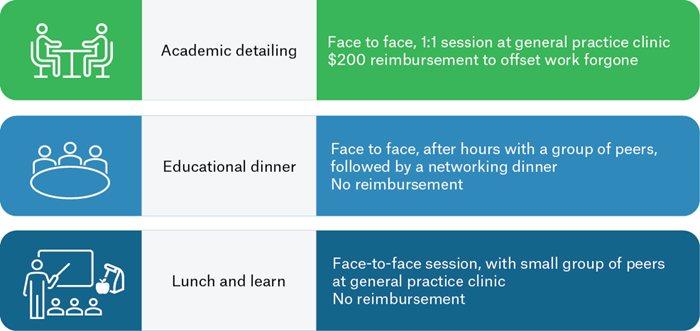
Figure 1. Types of educational sessions.
Data collection
Following the conclusion of each session, participants were provided a paper copy of the research participation information sheet and the anonymous, optional survey. The survey assessed demographic information, reason(s) for education modality choice, attitudes and experiences of VAD, and an evaluation of the education session itself (Appendix 2, available online only).
Data analyses
Quantitative survey data were analysed on IBM SPSS Version 29.0 (SPPS Inc) using descriptive statistics. Qualitative data (free text statements) relating to barriers and facilitators to initiate a discussion surrounding VAD were analysed and coded collaboratively by two authors (GW and ES) using the updated Consolidated Framework for Implementation Research (CFIR).12,13 The CFIR is an implementation framework that guides the assessment and categorisation of barriers and facilitators across five domains (innovation, outer setting, inner setting, individuals, implementation process) (Table 1).12,13 Within each domain there are multiple constructs (https://cfirguide.org/constructs). Where a statement could be categorised across multiple CFIR domains or constructs, it was coded to the domain or construct that reflected the greatest impact.
| Table 1. Consolidated Framework for Implementation Research domains adapted from Damschroder et al13 |
| CFIR domain |
Definition |
| Individual |
The roles and characteristics of individuals. |
| Outer setting |
The setting in which the inner setting exists (eg hospital system, state). There may be multiple outer settings and/or multiple levels within the outer setting (eg community, system, state). |
| Inner setting |
The setting in which the innovation is implemented (eg hospital, city). There may be multiple inner settings and/or multiple levels within the inner setting (eg unit, team). |
| Innovation |
The ‘thing’ being implemented (eg a new clinical treatment). |
| Implementation process |
The activities and strategies used to implement the innovation. |
| CFIR, Consolidated Framework for Implementation Research |
Ethical approval
Ethical approval was granted by Metro South Human Research Ethics Committee (HREC/2024/QMS/107100).
Results
Participant characteristics
During the period April to December 2024, n = 789 GPs were contacted, across n = 337 general practices. Of these, n = 197 (25%) GPs attended an educational session. Specifically, n = 116 (59%) attended a lunch and learn, n = 43 (22%) an educational dinner, and n = 38 (19%) academic detailing. A total of n = 183 participants completed the survey (93% response rate). Over half of the participants were female (n = 95, 52%) and most participants were either aged 41–50 years (n = 55, 30%) or 51–60 years (n = 43, 24%) (Table 2). Just under half of the participants had more than 20 years’ of GP experience (n = 74, 40%). Most participants had not initiated a discussion with patients (n = 154, 84%) nor had they been approached by a patient about VAD (n = 116, 63%).
| Table 2. Characteristics of survey respondents |
Characteristic
n (%)* |
|
AD
n = 38 |
ED
n = 35 |
LL
n = 110 |
Total
n = 183 |
Age
21–30
31–40
41–50
51–60
61–70
>70 |
|
3 (8)
10 (26)
12 (31)
9 (24)
4 (11)
0 (0) |
0 (0)
1 (3)
5 (14)
11 (31)
13 (37)
5 (14) |
6 (6)
22 (20)
38 (35)
23 (21)
16 (15)
5 (5) |
9 (5)
33 (18)
55 (30)
43 (24)
33 (18)
10 (6) |
Gender
Female
Male
Other/prefer not to say
Missing |
|
25 (66)
13 (34)
0 (0)
0 (0) |
18 (51)
17 (49)
0 (0)
0 (0) |
52 (47)
55 (50)
2 (2)
1 (1) |
95 (52)
85 (46)
2 (1)
1 (1) |
Years of experience
<2
2–5
6–10
11–15
16–20
>20
Missing |
|
4 (11)
6 (16)
9 (24)
5 (13)
4 (11)
10 (26)
0 (0) |
0 (0)
1 (3)
3 (9)
2 (6)
1 (3)
28 (80)
0 (0) |
7 (6)
10 (9)
19 (17)
23 (21)
14 (13)
36 (33)
1 (1) |
11 (6)
17 (9)
31 (17)
30 (16)
19 (10)
74 (40)
1 (1) |
VAD continuum
Mean ± SD |
|
7 ± 3A |
6 ± 3A |
6 ± 3A |
6 ± 3A |
Considered becoming authorised VAD practitioner
No
Yes
Already authorised
Missing |
|
24 (63)
13 (34)
0 (0)
1 (3) |
26 (74)
8 (23)
0 (0)
1 (3) |
90 (82)
15 (14)
2 (2)
3 (3) |
140 (77)
36 (20)
2 (1)
5 (3) |
|
Initiated VAD conversations
No
Yes
Number of times mean ± SD
Unsure
Missing
|
|
31 (82)
7 (18)
2 ± 2B
0 (0)
0 (0) |
30 (86)
5 (14)
1 ± 1B
0 (0)
0 (0) |
92 (84)
13 (12)
1 ± 1B
4 (4)
1 (1) |
54 (84)
24 (13)
2 ± 1B
4 (2)
1 (1) |
Approached by patient about VAD
No
Yes
Number of times mean ± SD
Unsure
Missing |
|
22 (58)
16 (42)
2 ± 1C
0 (0)
0 (0) |
23 (66)
12 (34)
2 ± 1C
0 (0)
0 (0) |
71 (65)
34 (31)
2 ± 1C
4 (4)
1 (1) |
116 (63)
62 (34)
2 ± 1C
4 (2)
1 (1) |
* Because of rounding, percentages may not add up to 100%.
VAD continuum: GPs rated their alignment on a 0–10 scale, 0 being conscientious objector and 10 being conscientious participator.
An = 37 AD, n = 32 ED, n = 107 LL, n = 178 total
Bn = 6 AD, n = 3 ED, n = 5 LL, n = 169 total
Cn = 7 AD, n = 5 ED, n = 17 LL, n = 154 total
AD, academic detailing; ED, educational dinner; LL, lunch and learn; SD, standard deviation; VAD, voluntary assisted dying. |
Reasons for educational modality choice
There was a total of n = 284 reasons for the type of educational session chosen (lunch and learn n = 156, academic detailing n = 73, educational dinner n = 55). The most frequent reason across all three session modalities was convenience (lunch and learn: n = 85, 55%; academic detailing: n = 26, 36%; educational dinner: n = 19, 35%) (Figure 2). Additional reasons within the lunch and learn sessions included timing (n = 53, 34%), networking (n = 12, 8%) and other (email advertisement from BSPHN and organised by the practice or manager) (n = 5, 3%). Additional educational dinner reasons included networking (n = 16, 29%), timing (n = 15, 27%) and other (n = 5, 9%) (meeting speakers in person, first option attendee became aware of, new information needed to be learnt, not able to stop at lunchtime, and preference for that particular session modality). Lastly, additional reasons for choosing academic detailing included timing (n = 18, 25%), reimbursement (n = 12, 16%), other (not knowing other session modalities existed, preference for that specific session modality, facilitates more detailed information and conversations) (n = 7, 10%), and networking (n = 6, 8%).
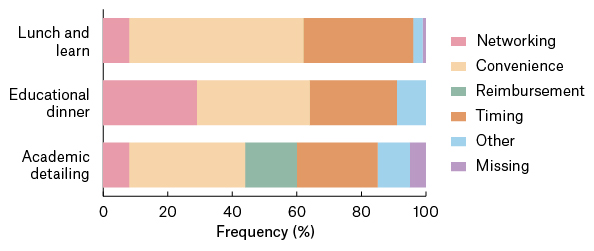
Figure 2. Reasons for session modality choice.
Perceptions of educational sessions
GPs’ perceptions of the educational sessions are shown in Figure 3 and Table 3. Nearly all participants across all three groups strongly agreed that the session increased knowledge and confidence to discuss VAD (academic detailing n = 35, 92%; educational detailing n = 31, 91%; lunch and learn n = 91, 84%). Both the educational dinner (n = 12, 36%) and lunch and learn (n = 44, 40%) participants mostly neither agreed or disagreed the sessions changed their consideration of becoming a VAD practitioner, whereas most participants in the academic detailing group strongly agreed to this (n = 13, 34%).
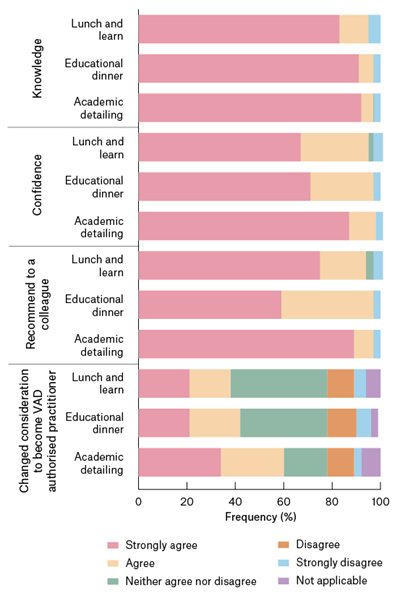
Figure 3. General practitioners’ perceptions of educational sessions.
VAD, voluntary assisted dying.
| Table 3. Perceptions of educational sessions |
Statements
n (%)* |
|
AD
n = 38 |
ED
n = 35 |
LL
n = 110 |
Total
n = 183 |
| It increased my knowledge about VADA |
Strongly agree
Agree
Neither agree nor disagree
Disagree
Strongly disagree |
35 (92)
2 (5)
0 (0)
0 (0)
1 (3) |
31 (91)
2 (6)
0 (0)
0 (0)
1 (3) |
91 (84)
13 (12)
0 (0)
0 (0)
5 (5) |
157 (87)
17 (9)
0 (0)
0 (0)
7 (4) |
| It increased my confidence to talk about VAD with my end-of-life patientsB |
Strongly agree
Agree
Neither agree nor disagree
Disagree
Strongly disagree |
33 (87)
4 (11)
0 (0)
0 (0)
1 (3) |
24 (71)
9 (27)
0 (0)
0 (0)
1 (3) |
72 (67)
30 (28)
2 (2)
0 (0)
4 (4) |
129 (72)
43 (24)
2 (1)
0 (0)
6 (3) |
| I would recommend it to a colleagueB |
Strongly agree
Agree
Neither agree nor disagree
Disagree
Strongly disagree |
34 (90)
3 (8)
0 (0)
0 (0)
1 (3) |
20 (59)
13 (38)
0 (0)
0 (0)
1 (3) |
81 (75)
20 (19)
3 (3)
0 (0)
4 (4) |
135 (75)
36 (20)
3 (2)
0 (0)
6 (3) |
| It has changed my consideration of becoming a VAD practitionerC |
Strongly agree
Agree
Neither agree nor disagree
Disagree
Strongly disagree
NA |
13 (34)
10 (27)
7 (18)
4 (11)
1 (3)
3 (8) |
7 (21)
7 (21)
12 (36)
4 (12)
2 (6)
1 (3) |
23 (21)
19 (17)
44 (40)
12 (11)
5 (5)
6 (6) |
43 (24)
36 (20)
63 (35)
20 (11)
8 (4)
10 (6) |
* Because of rounding, percentages may not add up to 100%.
Response ratings ranged from 1 (strongly disagree) to 5 (strongly agree) with a not applicable option.
A n = 38 AD, n = 34 ED, n = 109 LL, n = 181 total
B n = 38 AD, n = 34 ED, n = 108 LL, n = 180 total
C n = 38 AD, n = 33 ED, n = 109 LL, n = 180 total
AD, academic detailing; ED, educational dinner; LL, lunch and learn; NA, not applicable; VAD, voluntary assisted dying. |
Barriers and facilitators for general practitioners initiating a discussion relating to voluntary assisted dying
Overall, there were n = 347 barriers and n = 356 facilitators identified to initiate a discussion related to VAD with patients. Both barriers and facilitators were identified across all CFIR domains. Specifically, most barriers (n = 232, 67%) and facilitators (n = 153, 43%) were categorised in the individual domain (Figure 4).
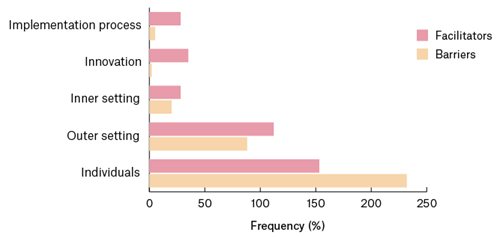
Figure 4. Barriers and facilitators to discuss voluntary assisted dying with patients.
Individuals
Barriers
Barriers in the individual domain were most frequent (67%) and accounted for 232 barriers cited by GPs. Most of these were categorised within the motivation construct (n = 176) and included both the GPs’ and patients’ ‘personal beliefs’ (eg conscientious objector, feeling ‘shame’), ‘religion’, and ‘culture’. There were 43 barriers categorised in the capability construct and included GPs’ ‘lack of knowledge’, ‘clinical confidence’, ‘communication skills’, and ‘not knowing where to refer’ a patient who is interested in accessing VAD or having an ‘uncertainty of the process’. The remaining barriers (n = 13) related to the opportunity construct, specifically GPs not discussing VAD because of ‘English as second language’, ‘patients not willing to think of VAD or advance care planning’, ‘late conversations’, and patient ‘family pressures or objections’.
Facilitators
The individual domain contained 153 facilitators, the highest of the total facilitators (43%). Most facilitators related to the opportunity construct (n = 58). GPs discussed VAD ‘when conducting advance care planning’ and at the ‘patient’s request’. There were 30 facilitators related to GPs’ motivation to discuss VAD because of ‘knowing the patient well’ or having a ‘good trustworthy relationship with family and patient’. Facilitators focused on the GPs’ perceptions of the patient (n = 38) included the patient’s ‘knowledge’ and ‘awareness’ of VAD, ‘patient interests, beliefs and wishes’, as well as ‘family support’. The remaining facilitators (n = 27) described the capability construct, specifically GPs’ ‘knowledge’, ‘skill set’ and ‘confidence in (VAD) conversations’.
Outer setting
Barriers
The outer setting represents the environment where the general practice exists in relation to the wider community and legislation. A quarter of the total barriers were represented within this domain (n = 88). Most related to the policies and law construct (n = 78), specifically the VAD eligibility and legalities such as ‘concerns about sounding coercive’, ‘fear of being sued’, ‘feeling pressured by family to discuss with patient’, ‘prognostication difficulties’, as well as the ‘patient not having decision making’. Additional barriers related to the construct of local conditions, specifically ‘lack of access to VAD providers/services’ (n = 7), and ‘expected to act certain way with the community’ (n = 2). Only one barrier was categorised in the financing construct which included VAD-specific ‘remuneration’.
Facilitators
The outer setting comprised 112 facilitators (31%). Policies and legislations for VAD were stated 87 times and included advance health directives and inclusion criteria (terminal illness, less than 12-month life expectancy, capacity). Facilitators within the partnership and connection construct, such as ‘referral networks’ and connections with palliative care were mentioned 18 times. Other less frequent facilitators included the local attitudes such as the ‘role of a GP’ (n = 3) and local conditions of ‘accessibility/ease of access to VAD’ (n = 3). One suggested facilitator was within the financing construct, specifically a VAD-related Medicare Benefits Schedule item.
Inner setting
Barriers
The inner setting represents the setting of the general practice itself. Barriers within the inner setting were less frequent and accounted for 6% of the total barriers (n = 20). Barriers related to compatibility construct (n = 13), included ‘lack of time’ within a consultation to discuss VAD. The remaining barriers represented constructs of culture (‘general practice attitudes’ [n = 3]), access to knowledge and information (‘lack of training or information on VAD’ [n = 3]), and available resources (‘lack of resources’ [n = 1]).
Facilitators
There were 28 facilitators described in the inner setting (8%). Access to knowledge and information, specifically ‘knowing where to find further information’, ‘education’, and ‘presentations’ was reported 16 times. Less frequent facilitators were within the workflow compatibility (n = 8), such as ‘making the time in the consult for the discussion’ and ‘longer scheduled appointments’. Relational connections such as having ‘discussions with colleagues’ (n = 2) and available resources to discuss VAD such as having the ‘comfort at patient’s home or privacy of GP consultation room’ (n = 2) were also mentioned.
Innovation
Barriers
The innovation domain focuses on the ‘thing’ being implemented, in this case, discussing VAD with patients. Limited barriers were represented in this domain (n = 2, 1%) and related to constructs of evidence base and complexity, specifically being ‘relatively new’ (n = 1) and reported as a ‘complicated process’ (n = 1), respectively.
Facilitators
There were 35 facilitators reported within the innovation domain (10%). There was an indication VAD is a relative advantage and can be a ‘relief of suffering’ and can ‘address significant patient distress’; this was mentioned 31 times. Other facilitators included VAD ‘safety’ (evidence-base construct) (n = 1), ‘low or no cost’ (n = 1) (cost construct), and GPs can ‘refer to the VAD website’ for more information (innovation design construct) (n = 1). One suggested facilitator within the innovation design construct was a ‘summary sheet or flowchart of options including VAD, palliative care, and advance health directive’.
Implementation process
Barriers
Only 1% of total barriers were categorised within the implementation process domain, which represents strategies used to implement the discussion of VAD with patients. These barriers related to engaging patients and GPs (engaging recipients and deliverers construct). Specifically, ‘lack of community awareness’ and ‘information available’ (n = 4) and the patient not coming in for advance care planning (n = 1).
Facilitators
There were 28 facilitators reported within this domain (8%). All facilitators were suggestions or recommendations to engage both patients and GPs, rather than experienced facilitators. These included ‘ongoing education for public and clinicians’, ‘leaflets or brochures in waiting rooms’, ‘information sheets’ and ‘social media marketing’.
Discussion
End-of-life care for people in their last 12 months of life is a priority area for improvement in Australia.14,15 The role of Queensland GPs in this sensitive area is pivotal and challenging as it is an area of medicine where GPs are not yet fluent, but because of the national growing VAD demand, it could be essential to general practice. This study sought to identify and assess preferred types of face-to-face education for end-of-life care with a focus on Queensland GPs’ perceptions of VAD. The opt-in education participation rate of 25%, coupled with the remarkable 93% voluntary survey response rate, indicates interest in end-of-life care, VAD and relevance to GPs’ clinical practice.16 Most GPs opted for small group, interactive, lunchtime learning sessions, though all three sessions were found to be effective education strategies. While there was appetite for GPs to increase their knowledge surrounding VAD there was limited shift in willingness to become providers of VAD. Many barriers and facilitators for conducting VAD discussions were nominated by GPs.
Modality preferences and session evaluation
There was a clear preference for lunch and learn sessions, with nearly 60% of GPs opting for this modality (n = 116, 59%). Interestingly, convenience was cited as the key driver across all three modalities. This aligns with existing evidence on motivations behind modality selection for CPD-accredited education, where time constraints, access and scheduling play a significant role in the context of balancing clinical responsibility and professional development.17–19 This suggests convenience may be a personal construct for individual GPs and offering a variety of educational formats for GPs to decide might be a strategy to increase educational reach. Networking was the second most important factor, that played a role in both education dinners and lunch and learn sessions. Despite a financial incentive and its more interactive nature, academic detailing emerged as the least favoured option. This narrow uptake could be attributed to how sessions were advertised and perceived by GPs and the practice manager. The role of the practice manager in this context was highlighted by some GPs, where small group learning was considered to be the most practical and efficient for the general practice20 and thus only one modality was offered to the practice as a whole. This may explain the low rates for academic detailing, or it may reflect individual GPs’ intent to be more engaged with VAD and to receive bespoke personalised information, rather than that which could be gained through group educational sessions.
There were limited differences in GPs’ evaluation of the three face-to-face education modalities. GPs across all three education modalities reported an increase in confidence and knowledge to discuss VAD with their patients. The only apparent difference was that most participants in the academic detailing group either strongly agreed or agreed that the session had changed their consideration about becoming a VAD authorised practitioner. This finding could indicate that an academic detailing strategy is an effective way of influencing VAD practice culture, as it has proven to be in other areas of medicine.21 Alternatively, GPs who chose academic detailing may represent a subset already open to participation, in comparison to the group-based modalities. This may imply it is the characteristics or intent of GPs, rather than the educational modality alone, that explains the change in willingness to become an authorised practitioner. A limited shift in willingness to become providers of VAD in the other modalities could suggest GPs simply want to be informed about the VAD process to augment their patient care rather than practising it. This reflects recent literature that reports a gap between in principle support for VAD and subsequent willingness to participate.20
Barriers and enablers to voluntary assisted dying discussions
The CFIR provided a practical framework for the assessment of GP perspectives towards engagement in VAD discussions. Barriers and facilitators were observed across all domains, with most falling into the individual domain. The findings in this study are consistent with state, national and international literature.22–26 Individual factors, such as lack of knowledge, personal moral beliefs, religious perspectives and values combined with fear of judgement from patients and their families were frequently cited as motivational deterrents for VAD discussions. In contrast, enablers such as greater opportunities and patient receptiveness would allow GPs to feel more comfortable initiating and engaging in such conversations.
Compared with individual factors, facilitators and barriers in the inner and outer settings, as well as those in the innovation and implementation process domains, had a lesser impact on GPs’ decision-making related to engaging in VAD discussions. Interestingly however, remuneration is a frequently discussed topic and concern not only within Queensland, but nationally.27 Nonetheless, deterrents cited centred primarily on time constraints and stigma that reflected well-documented clinician perspectives.28–30 Having more time, access to information and ongoing education, together with more time for end-of-life discussions, were regarded as key elements that would enable VAD-related conversations with patients.
Implications
The findings of this study suggest that Queensland GPs are not routinely engaging in conversations about VAD, leaving patients unaware of their end-of-life options, and at risk of making uninformed decisions about their future care. While VAD educational modalities should focus on convenience and peer interaction, addressing individual barriers is critical to fostering motivation for VAD discussions between GPs and their patients. Importantly, addressing time constraints experienced by GPs through increased capacity, would enable a more complete approach to end-of-life care. Integration of VAD into broader education programs, in conjunction with strategies aiming to reduce stigma, may further normalise these interactions in primary care.
Limitations
This study is not without limitations. Some GPs mentioned only one modality choice was offered to them by practice managers, which may indicate the practice manager had great influence in pre-determining the education modality. This could be because of the practice manager’s own views on VAD, competing medical lunch topics, and differing ways the practice manager disseminated the study advertising material to the GPs. Also, some GPs may not engage with BSPHN and therefore the study advertisement might not have reached this population. Recruitment was also limited to the BSPHN catchment area, therefore, findings may not be generalisable to other PHNs or other Australian states. Although the BSPHN does include remote and rural locations, these demographics were not collected within the survey, which limits analysis between geographical locations with BSPHN. As part of the study design, an online option was not offered, which of course limited GP participation, especially within regional and rural locations of the catchment. This study may be subject to potential self-selection bias among participants, as those with strong views on VAD or end-of-life care may have been more likely to participate.
Future directions
Findings of this research can inform a larger scaled study that could include multiple Queensland PHNs and potentially a national reach. To facilitate a national reach, future recruitment strategies could include collectively emailing the GPs directly, The Royal Australian College of General Practitioners, the Australian College of Rural and Remote Medicine, and local PHNs. Additionally, understanding the role of the practice manager in the selection of education modality could enhance future promotional activities related to general practice education. Offering multiple modalities and incorporating elements of convenience and peer interaction can be used to suit individual preferences. Both face-to-face and online options could be offered, and cost-effectiveness of each modality could be investigated. Considering the significant influence of individual factors, a better understanding of GP and patient perceptions across different cultural and religious backgrounds could facilitate future implementation of education and behaviour change strategies.
Conclusion
All education modalities improved Queensland GPs’ knowledge of VAD in the end-of-life care context, although a small-group interactive lunchtime session is a preferred modality. However, recruitment strategies may have influenced GPs’ educational modality choice. This study contributes to new knowledge by exploring perspectives of GPs in engaging in conversation about VAD with their patients. The education-centric approach helped identify current facilitators and barriers to engagement, which forms a foundation for future interventional research in primary care and VAD.