In 2022, obesity affected approximately 7 million Australian adults.
1 Despite being a National Health Priority Area since 2008,
2 obesity was addressed in less than 1% of primary care consultations in 2015–16.
3
Australians, on average, wait 3 years longer than those from other countries to discuss weight management with healthcare professionals (8.9 vs 6 years).4 Barriers to receiving obesity care include individuals’ belief in personal responsibility for weight management, limited consultation time, inadequate financial incentives, insufficient reimbursement for obesity treatment, insufficient obesity management training for healthcare professionals and restricted access to or lack of awareness of specialist services.5–10 General practitioners (GPs) also report challenges related to patient motivation and adherence to lifestyle changes, with concerns expressed about embarrassing patients and compromising rapport.6 It is also well documented that weight stigma and discrimination are prevalent in healthcare settings,11 and the failure of some GPs to recognise obesity as a chronic disease8,12 further limits effective treatment and referral.
Primary care plays a central part in obesity management, with GPs well placed to identify and address associated risks. The Australian Obesity Management Algorithm offers a nationally endorsed framework to guide obesity management;13 however, it remains unclear whether GPs are aware of or routinely use it.
The aim of this study was to better understand current engagement, practices and barriers in obesity management, while identifying enablers and training needs to improve obesity management in Australian primary care.
Methods
Study design, setting and population
We performed a cross-sectional online survey to understand engagement levels, management strategies, perceived barriers and enablers, and training priorities for obesity care among Australian GPs. An open survey titled ‘Obesity management in primary care: a general practitioner survey’, along with study details, was distributed through the mailing lists of the National Association of Clinical Obesity Services and Healthed (a medical education provider) and the mailing list and online notice board of The Royal Australian College of General Practitioners Specific Interest groups. The survey was co-designed with primary care providers on the basis of a literature gap analysis and a prior survey,5 and it was tailored to the Australian healthcare context. It was pilot tested with four healthcare professionals including GPs and an endocrinologist to ensure functionality, clarity, relevance and conciseness. Feedback on the survey’s structure, clarity of language and readability was incorporated to refine the final version.
Data collection, management and storage
The survey gathered data on participant demographics and their experience, prior training, perceived barriers and enablers, training preferences, self-efficacy and attitudes toward obesity management in primary care. The survey included 76 items in diverse formats including dichotomous (Yes/No), multiple-choice, 5-point Likert-scale, ranking and open-ended questions. Participants were asked to rank 13 barriers, eight enablers and eight learning needs from 1 to 3. To ensure data accuracy and minimise input errors, the survey used standardised response options, explanatory help text, built-in logic and validation rules. Responses were monitored for completeness and duplication. All data were collected and securely stored in the University of Sydney’s Research Electronic Data Capture (REDCap) system. No identifying data were collected from the participants. Consent was implied through participation, and no financial incentives were offered to complete the survey. Data were collected between 6 November 2023 and 29 February 2024.
Statistical analysis
Only completed surveys were analysed. Exploratory data analysis was performed to detect patterns or anomalies. Ranking questions were analysed using a scoring system. A thematic analysis was conducted to identify and analyse patterns within the open-ended responses. Themes were reviewed and refined to ensure they accurately represented the data. Coding was conducted independently by two researchers (TP and SH), and any discrepancies were resolved through discussion.
Ethics approval
Ethics approval for the study was granted by the Sydney Local Health District Human Research Ethics Committee – RPAH Zone (2023/ETH01716).
Results
Of the 1261 GPs who chose to participate in the survey, five left it blank, 313 partially completed it and 943 fully completed it. This resulted in a completion rate of 74.8%. GPs were mostly female (621, 65.9%) and were in practice beyond their training for a mean of 24.3 years (range: 0–58 years). All states and territories of Australia were represented, although most primary practice locations were in large cities (612, 64.9%; Table 1).
| Table 1. Demographics and characteristics of the study participants (n = 943) |
| Characteristic |
General practitioners (GPs) |
| Recruitment, n |
|
| Total survey invitations sent |
23,478 |
| Respondents |
1261 |
| Respondents who completed the survey |
943 |
| Gender, n (%) |
|
| FemaleA |
621 (65.9) |
| Male |
316 (33.5) |
| Non-binary |
2 (0.2) |
| Prefer not to say |
4 (0.4) |
| Other |
0 (0.0) |
| Practice geographic location, n (%) |
|
| Australian Capital Territory |
25 (2.7) |
| New South Wales |
323 (34.3) |
| Northern Territory |
4 (0.4) |
| Queensland |
143 (15.2) |
| South Australia |
74 (7.8) |
| Tasmania |
18 (1.9) |
| Victoria |
261 (27.7) |
| Western Australia |
95 (10.1) |
| Primary practice community, n (%) |
|
| Rural (<3000 people) |
35 (3.7) |
| Small town (3000–19,999 people) |
112 (11.9) |
| Medium city (20,000–149,999 people) |
184 (19.5) |
| Large city (≥150,000 people) |
612 (64.9) |
| Practising years beyond training, mean (SD) |
24.3 (13.6) |
| Patients seen/treated monthly, mean (SD) |
|
| All patients |
326.8 (220.1) |
| Patients with obesity |
79.5 (89.0) |
| Treated primarily for obesity |
18.1 (32.1) |
| A Female GPs represented 50% of the Australian GP workforce by headcount in the 2023–24 financial year.23 |
Current obesity engagement and management practices
The mean number of patients seen monthly was 326.8, with 18.1 patients monthly treated primarily for obesity (Table 1). Most GPs (633, 67.1%) reported feeling very and somewhat comfortable having discussions about weight with their patients. Over half of GPs (525, 55.7%) reported discussing obesity management with patients with obesity most of the time or always. When treating obesity, GPs provide dietary and lifestyle advice themselves most of the time (351, 37.2%) or always (513, 54.4%). Very low-energy diets were recommended sometimes (354, 37.5%), rarely (258, 27.4%) or never (170, 18%). In contrast, prescription obesity pharmacotherapy was recommended sometimes (558, 59.2%) or most of the time (192, 20.4%). Most GPs have never (549, 58.2%) or rarely (205, 21.7%) consulted the Australian Obesity Management Algorithm, primarily because they were unaware of its existence (530, 56.2%). GPs reported using Medicare-subsidised programs for managing people with obesity, specifically GP Chronic Condition Management Plans (786, 83.4%) and Team Care Arrangement (756, 80.2%). GPs sometimes referred patients with obesity to allied health practitioners outside their practice (516, 54.7%) or to a bariatric surgeon (529, 56.1%; Figure 1).
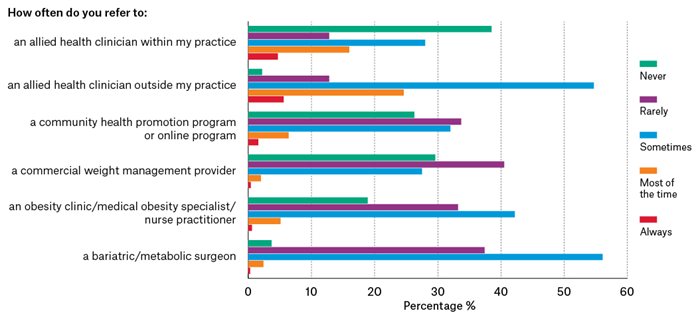 Figure 1. Frequency of general practitioner (GP) referrals to non-GP specialists or services for dietary and lifestyle advice.
Barriers to obesity management in primary care
Financial barriers – including renumeration for obesity consultations, obesity pharmacotherapy and allied health appointments – and time constraints were the most highly ranked barriers to delivering obesity care (Figure 2). The highest ranked barrier was that ‘weight management requires a longer consultation, and this is not adequately remunerated’. Although the current Medicare Benefits Schedule (MBS) fee for a GP consultation is $82.90 for 20–40 minutes and $122.10 for over 40 minutes, the mean remuneration deemed appropriate by GP respondents was $153.60 (standard deviation [SD] $50.30) for a 30-minute weight management consultation and $284.90 (SD $98.60) for a 60-minute consultation.
In response to the open-ended question on additional barriers to providing optimal obesity care, 523 GPs (55.4%) reported various barriers, mostly related to the lack of patient engagement (Table 2). The remaining GPs either did not report any additional barriers beyond those already listed in Figure 2 (n = 328, 34.8%), had no further barriers to report (n = 85, 9.0%) or believed there were no barriers (n = 7, 0.7%).
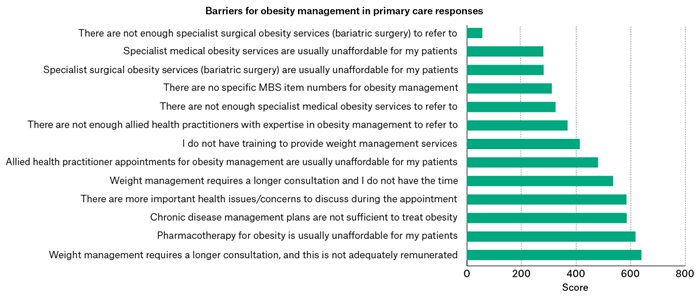 Figure 2. Barriers for obesity management in primary care in rank order.
MBS, Medicare Benefits Schedule.
| Table 2. Additional barriers to optimal obesity treatment |
| Theme |
Subthemes |
n (%) |
| Patient engagement |
- Not accepting obesity as a disease
- Lack of commitment, interest or motivation to lose weight
- Poor treatment compliance
- Reluctance to discuss obesity, adopt lifestyle and dietary changes, or accept referrals to allied health professionals
|
280 (29.7) |
| Stigma |
- Patients’ internalised stigma (embarrassment and self-blaming)
- General practitioners’ (GPs’) fear of upsetting patients or generating blame/shame/body image issues
- Weight stigma perceived as an ongoing issue in healthcare settings
|
61 (6.5) |
| Management difficulties |
- Unrealistic patient expectations
- Treatment failure
- Lack of suitable treatments
- Long-term management difficulties
|
54 (5.7) |
| Training and resources |
- Lack of guidelines to treat obesity
- Insufficient training for GPs
- Insufficient resources or materials for patients
|
34 (3.6) |
| Social determinant of health and community support |
- Cost of healthy food
- Lack of upstream interventions
- Lack of community-based activities to improve cooking skills and promote exercise
|
27 (2.9) |
| Education and culture |
- Low literacy levels
- Language barriers
- Cultural beliefs (food preferences)
|
24 (2.5) |
| Geographic barriers |
- Living in rural areas with limited access to allied health services
|
21 (2.2) |
| Health at every size approach |
- Preference for non–weight related health goals
- Encouraging enjoyment of healthy behaviours
- Disagreement with weight-focused premises
|
8 (0.8) |
| Social media impact |
- Conflicting messaging about obesity management and medication
- Inadequate dietary advice
|
5 (0.5) |
| GP interest |
- Obesity is not GPs’ field of interest
|
4 (0.4) |
| Communication gaps |
- Lack of communication among health professionals
|
3 (0.3) |
| Medication side effects |
- Adverse effects of medications
|
2 (0.2) |
Enablers to obesity management in primary care
Consistent with the highest ranked barriers, the highest ranked enablers for enhancing obesity management in primary care included increased renumeration for obesity management consultations, access to Pharmaceutical Benefits Scheme (PBS)-funded obesity pharmacotherapy and increased access to subsidised community allied health services (Figure 3).
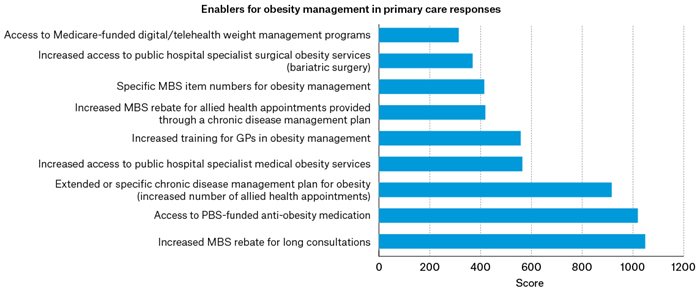 Figure 3. Enablers for obesity management in primary care in rank order.
GP, general practitioner; MBS, Medicare Benefits Schedule; PBS, Pharmaceutical Benefits Scheme.
Learning needs and learning gaps in obesity management
The top five learning needs identified by GPs were: (1) training on current weight management guidelines for nutrition and physical activity; (2) guidance on when and how to prescribe very low-energy or meal-replacement diets; (3) guidance on when and how to prescribe obesity pharmacotherapy; (4) guidance for using chronic disease management plans for obesity; and (5) guidance on managing patients after bariatric surgery. Furthermore, a total of 120 GPs had undertaken formal training in obesity management (12.7%), whereas 108 (11.4%) identified the lack of such training as a barrier to providing obesity management.
Discussion
Obesity management in primary care in Australia is hindered by multiple barriers. This survey identifies financial constraints and time limitations as the most critical obstacles in delivering effective obesity care. Although most GP respondents (67.1%) were comfortable discussing obesity management with patients, they indicated that MBS renumeration is currently inadequate for obesity management consultations. GPs reported that current rebates need to be 2.3 times higher for a 60-minute consultation and 1.9 times higher for a 30-minute consultation for adequate renumeration. Consistent with this, an increase in the MBS rebate for long consultations was the highest-ranked enabler for improving obesity care.
GPs reported providing dietary and lifestyle advice themselves most of the time (37.2%) or always (54.4%), despite lacking formal training in obesity management (87.3%). In addition, insufficient chronic disease management plans and unaffordable allied health services were ranked by GPs as key barriers. This suggests that GPs are delivering dietary and lifestyle advice themselves, despite a lack of training, because access to allied health services is a financial barrier for patients. MBS funding under a Chronic Condition Management Plan is restricted to $60.35 per session for only five 20-minute sessions per year. According to previous systematic reviews,14,15 intensive behavioural interventions offering 12–26 sessions in the first year of treatment result in greater weight loss than moderate-intensity interventions (fewer than 12 sessions per year). Therefore, five sessions are insufficient to achieve impactful results. In addition, MBS funding for allied health consultations is inadequate, with out-of-pocket expenses for patients being a further barrier to treatment. Lack of sufficient access to allied health appointments forces GPs to fill the gap, adding to the pressures of limited appointment times.
Over half of GPs (55.7%) reported discussing obesity management with patients with obesity most of the time or always. This represents a positive shift when compared with earlier data (less than 1% of primary care consultations addressed obesity in 2015–16).3 Despite this progress, GPs’ perception of limited patient engagement (29.7%) and weight stigma (6.5%) were identified as ongoing barriers. GPs expressed concern about causing distress or reinforcing stigma by initiating weight management conversations, in keeping with previous research.16–18 These highlight the need to improve the quality of patient–GP communication across healthcare settings to enhance engagement and reduce barriers to effective obesity care.
Just over half of GPs were aware of the Australian Obesity Management Algorithm, with four in five never or rarely consulting it for treatment guidance. This might explain the low uptake in prescription of very low-energy diets, which were recommended by GPs sometimes (37.5%), rarely (27.4%) or never (18%) despite being recommended as first-line therapy in the Australian Obesity Management Algorithm. Furthermore, GPs chose guidance on when and how to prescribe very-low energy or meal-replacement diets as their second-highest-ranked learning need. This indicates that a lack of training on the prescription of very low-energy diets contributes to their underuse. Future Australian obesity management guidelines must be accompanied by a well-designed dissemination strategy to improve access to the guideline and adequate training to ensure implementation of the recommendations.
The second-highest-ranked barrier to obesity management is the unaffordability of pharmacotherapy for obesity, whereas the second-highest-ranked enabler for effective obesity care is access to PBS-funded obesity pharmacotherapy. There are no obesity pharmacotherapies subsidised through the PBS or private insurance schemes in Australia, with out-of-pocket costs ranging from $88 to $700 per month. This is in stark contrast to the monthly cost of a PBS-supported medication ($31.60, or $7.70 for a concession card holder). As a result, pharmacotherapy for obesity is unaffordable for most Australians. This highlights the urgent need for policy changes to MBS and PBS funding. Such changes would enable more comprehensive and equitable obesity care in the primary care setting for all patients, regardless of their financial circumstances.
The unaffordability of obesity pharmacotherapy is intrinsically linked to broader concerns about social inequity in health. In Australia, there is increasing disparity in chronic disease prevalence between wealthy and non-wealthy populations, with most of this burden driven by obesity-related conditions.19 This discrepancy underscores the need for targeted interventions and equitable resource allocation to address the underlying social determinants of health and improve obesity management across all socioeconomic strata.
The implications of these findings are significant and aligned with recent national strategies focused on reforming and strengthening Australia’s primary care system.20–22 To support the implementation of existing national strategies, advocacy for enhanced MBS and PBS funding is crucial to enable more comprehensive and equitable obesity care in primary care settings. Implementing these strategies and providing appropriate education and support can significantly improve obesity management outcomes.
Strengths and limitations
This study is the largest Australian survey on obesity management in primary care, representing approximately 3.5% of GPs. The large sample size enhances reliability, with participants from all states and territories, covering diverse practice locations including cities and rural areas. Distribution via a health education organisation included GPs with and without a specific interest in obesity, ensuring broad perspectives. Questions tailored to the Australian context provided actionable strategies, and ranking of responses identified key priorities and detailed barriers and enablers of obesity management.
Limitations include an overrepresentation of female respondents when compared with the general population of GPs (66% vs 50%, respectively),23 fewer rural and regional participants, and a defined list of barriers and enablers, which may have restricted responses. Despite broad invitations to complete the survey, GPs interested in obesity management may have been more likely to participate.
Conclusion
Critical barriers to effective obesity management in primary care were identified in this study, including financial constraints, time limitations and training deficiencies.These obstacles highlight the need for systemic changes to improve obesity care, such as enhanced funding and training. Addressing these barriers is a key step towards ensuring equitable, timely and effective access to obesity treatment and improving health outcomes at both the individual and population levels.