News
Call to address ‘chaotic and confusing’ RSV vaccination approach
Fragmentation between the states has caused GPs confusion as well as an inequitable system of delivering infant immunisation.
 ‘We’ve taken incredibly effective immunisation programs and wrapped them up in a complex web of varying eligibility rules that confuse healthcare providers and families.’
Leading immunisation experts have called on governments to act now to ‘radically reduce’ the number of infants impacted by severe respiratory syncytial virus (RSV), amid ongoing inconsistencies in vaccine eligibility around the country.
The RSV Mother and Infant Protection Program (RSV-MIPP), launched in 2025, takes a dual approach to protecting babies, pairing maternal vaccination with direct infant antibody protection.
While maternal vaccination is funded and consistently available through the National Immunisation Program (NIP), infant antibody immunisation is funded and delivered by individual states and territories, with differing levels of access, eligibility and awareness.
The Immunisation Foundation of Australia (IFA) says this funding split has led to fragmented delivery, inconsistencies, inequitable access, and suboptimal protection of infants against severe RSV.
In a consensus statement released this week, which brings together the views of clinical experts, researchers and patient advocates, the IFA said Australia can radically reduce the number of infants impacted by severe RSV, provided ‘the right intervention reaches the right infant at the right time’.
This requires national funding with clear and consistent eligibility criteria, as well as the inclusion of direct infant antibody RSV protection on the NIP.
The IFA would also like to see the maternal RSV vaccination offered to all pregnant women from 28 weeks of gestation without routine exclusion, integrating it into standard antenatal care throughout obstetrics, general practice, pharmacy and midwifery.
The confusion is familiar to Dr Rochelle Oei-Hicks, a GP who is on the IFA expert advisory panel. She has heard from many medical professionals and families about the challenges, as well as having her own experience with RSV.
Her son Zach caught RSV at just 12 days old in 2024, spending 15 days in hospital. She says it came at a time when there was much misinformation and confusion about RSV vaccines.
‘Even as a GP at the time, I wasn’t made aware that I could have privately paid for the immunisation, and if I could turn back time, I would have paid for that private immunisation, knowing what Zach went through,’ Dr Oei-Hicks told newsGP.
‘He’s now a healthy growing boy, but he’s now more likely to have asthma, which is one of the common complications of having RSV, and he’s actually now had three pretty severe cases, including the initial hospitalisation.
‘Unfortunately, Zach isn’t eligible for the RSV immunisation, given that he is in New South Wales, even though he was at risk for a serious RSV season in his second year. Unfortunately, based on the New South Wales guidelines, he didn’t meet criteria.
‘There’s no access for private RSV immunisations anymore now that it’s been rolled out in the states.’
More than 159,000 Australian infants were protected against RSV between January and August this year through either maternal vaccination or direct infant immunisation. However, an estimated 40,500 babies went without RSV protection, the statement said.
With Australian research indicating one RSV-related hospital admission is prevented for every 25 infants immunised, the immunisation gap equates to approximately 1620 potentially preventable hospital admissions.
There are also inconsistencies across the states. Figures show 60% of all babies who received the RSV antibody in 2026 lived in Western Australia or Queensland, despite these states accounting for just 30% of Australian births, the report said.
By comparison, the two largest states, New South Wales and Victoria, accounted for just a third of all infant antibody immunisations combined.
IFA Founder and Director Catherine Hughes said families find the system is ‘chaotic and confusing’, with immunisation access and information differing depending on postcode.
‘We know RSV protection works, with reports of hospital admissions falling by almost 70%. However, with more than 40,000 Australian babies missing out on RSV protection this year, we have a major problem,’ she said.
‘We’ve taken incredibly effective immunisation programs and wrapped them up in a complex web of varying eligibility rules that confuse healthcare providers and families.’
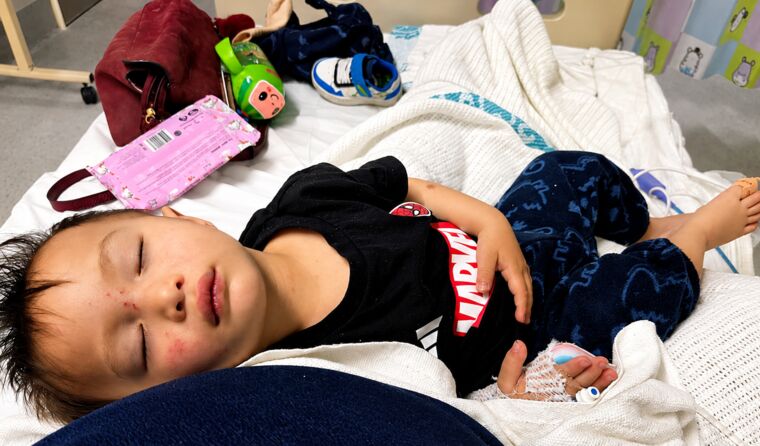
The impact is highlighted through the case of baby Giannis (pictured), born in December 2024.
His mother, Melissa Mansell from Campbelltown, NSW, was not offered maternal RSV vaccination because the national MIPP did not commence until February 2025. Although the baby was eligible for infant RSV protection through the 2025 catch-up program, this was never offered.
After Giannis became unwell and was hospitalised with severe RSV leading to pneumonia, and despite his paediatrician recommending he receive infant RSV immunisation during his second RSV season, the family has been unable to access it.
Now with a newborn, the family still does not know where or how to obtain protection for Giannis.
Dr Oei-Hicks said she hopes the consensus will bring the urgent need for national consistency to government’s attention.
‘The consensus was designed to address those challenges and come up with [recommendations] to provide the Government which will help improve access and health outcomes for the community,’ she said.
‘What we’re seeing at the moment is that the state divide is actually impacting health outcomes, in particularly in RSV immunisation uptake, and then in terms of hospitalisations for RSV.
‘Being able to have the infant immunisation on the national immunisation program would help to make the guidelines a lot clearer to health professionals, but also allow for people to understand that RSV infant immunisation is important and is being prioritised by the entire nation, not just individual states.’
Log in below to join the conversation.
child health National Immunisation Program NIP respiratory syncytial virus RSV vaccination vaccine
newsGP weekly poll
Have you ever found out that a patient has previously failed to disclose their use of GLP-1 medicines to you as their usual GP?