News
CPD module latest tool in fight against gambling
The course will help GPs identify gambling-related harm in patients and support them with evidence-based approaches.
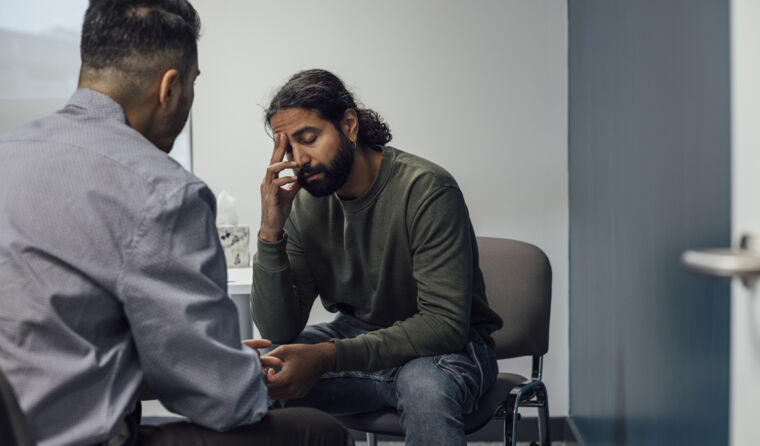 Australians spend more on gambling per capita than people from any other country in the world.
Gambling has been described as Australia’s national sport. And with good reason – our nation is the gambling capital of the world.
Australians spend more money per person gambling than any other country and around twice as much as other Western countries.
And per capita, Australians also lose more to gambling, on average around $1500 per person a year.
GPs often see the human toll of gambling, along with the gambler’s family, friends and colleagues.
And that toll is much greater in socioeconomically disadvantaged communities says Dr Tim Senior, Chair of RACGP Specific Interests Poverty and Health.
‘I suspect that it affects all sections of the community, but if you’re quite well off, it has less of an impact on you, whereas if you haven’t got that much money to start with, small losses can mount quickly and have a huge impact on essentials of daily living,’ he told newsGP.
To that end, in 2024, gambling was added as a topic to the mental health chapter of the 10th edition of the RACGP Red Book.
And now, GPs have another tool to help identify and manage patients suffering from the negative impacts of gambling, with a new CPD learning module.
The Gambling-Related Harm education course is a 30-minute module that guides participants through evidence-based approaches as they work through a progressive case scenario.
As patients often present with related physical or psychological symptoms, rather than revealing gambling as their underlying issue, course participants will learn to identify the clinical features and risk factors that should prompt case finding for gambling-related harm.
They will work through the case scenario using practical approaches to recognising risk, and making decisions about screening, sensitive conversations, assessment and referral to appropriate support, using a patient-centred management approach.
Associate Professor Caroline Johnson, a member of the RACGP Expert Committee – Quality Care, told newsGP the module is designed to provide GPs with additional resources ‘beyond what is in the Red Book’ – for which she was chapter lead – as it is the first edition to recommend case finding for gambling in certain clinical situations.
‘We can’t screen every patient about every health risk at every consult, but the Red Book gives some clear tips on when specific questions about gambling should be explored,’ she said.
‘I’ve certainly been more mindful of the problem in recent years, as the statistics about increased access, use and harms of gambling have become more available.
‘It can be hard to broach the subject with a patient if you don’t yet have a well-established clinical relationship with them; it is not something patients readily disclose, so the course is useful in providing some really helpful questions and prompts to try to make it easier for patients to disclose gambling-related harm.’
Dr Senior said he has seen patients present with other issues due to underlying gambling-related harm.
‘We discover more of it when we specifically ask about it; I’ve had someone recently who has mentioned it to me,’ he said.
‘I suspect it’s commoner than we think, and I suspect it’s not an isolated thing; it’ll go along with other difficulties in a person’s life, probably other mental health conditions, sometimes other addictions which we’re more used to looking at.
‘When we start asking specifically, then we come across more of it than we might be expecting.’
The course comes at a crucial time in Australia’s long relationship with gambling, labelled as a ‘major public policy issue’ by the Federal Government.
In response, new laws will come into effect from 1 January which include restricting betting ads during live sports and in sports venues, banning direct marketing to at-risk customers and strengthening action against illegal gambling services.
Dr Senior said gambling is ‘just another example we see where quite large companies can make significant money out of activities that harm people’.
‘We see it with gambling, we see it with tobacco companies and the way they work, we see it with climate change and the health effects of that, and we see it with the food industry and their effects on food lobbying,’ he said.
Associate Professor Johnson said the new course provides GPs with a ‘great opportunity’ to upskill, offering gambling-specific questions to be used alongside motivational interviewing skills known to help patients with behavioural change.
‘GPs can make a big difference to someone’s life by recognising that gambling can become a serious health issue and being a supportive guide to the solutions known to help,’ she said.
For more information on the RACGP’s Gambling-Related Harm course, visit the MyCPD webpage.
Log in below to join the conversation.
addiction medicine CPD gambler gambling gambling related harm harm minimisation learning module mental health problem gambler
newsGP weekly poll
Have you ever found out that a patient has previously failed to disclose their use of GLP-1 medicines to you as their usual GP?