Feature
Burnout and the ‘Medicare factory’: A GP’s breaking point
Dr Elly Goodsall shares why disillusion and a system that undervalues complex care has left her walking away from general practice.
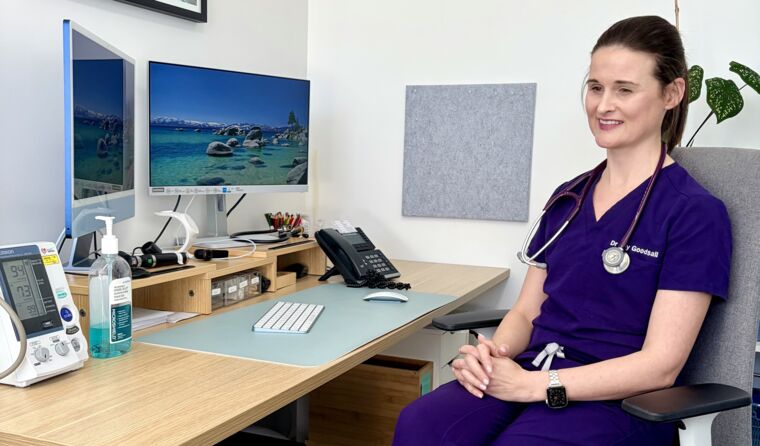 ‘I feel like they’re trying to build a Medicare factory, but patients are not pieces of metal on a conveyor belt,’ says GP Dr Elly Goodsall.
Dr Elly Goodsall is a GP who cares deeply and practises with heart – but it’s not the kind of medicine that can easily be shoehorned into what she describes as high-churn, bulk-billed general practice.
Patients often wait weeks, or even months, to see her and arrive with a list of issues to discuss and complex care needs that are best handled in a long consultation.
‘When someone waits that long, they’re never going to just pop in for a script. There are no consultations like that,’ Dr Goodsall, aged 45, tells newsGP.
‘In every consult you’ve got that complex balance, and you have to work out all the other things they did while waiting to see you, like going to a bulk-billing clinic to get a prescription, telehealth, or going into the pharmacist for medical certificates, or to treat UTIs – the things you would traditionally see your GP for.
‘It just makes short consultations not relevant to how patients present today.’
It’s a situation familiar to many, but evidence shows female GPs are more likely to see patients that have longer and more involved consultations. And the work doesn’t end once the patient leaves the consulting room.
There is an ‘emotional and cognitive load’ as well as hours of unpaid work that is invisible and undervalued, explains Dr Goodsall.
But that weight has now reached a point of burnout and she has decided to step away from general practice.
‘I know that this is best for my family,’ says Dr Goodsall, who is a mother to two young girls and a wife to a fellow medical practitioner.
‘And although I feel like I’m letting a lot of patients down, which is really hard and I do feel guilt around that quite deeply, I can’t continue practising under the way general practice is structured because there’s too much personal cost.’
Helping cement the decision was a move by Federal Health and Ageing Minister Mark Butler to introduce tripled bulk-billing incentives to financially reward GPs for universal bulk billing.
‘I just felt thrown under the bus,’ she said.
‘I was really saddened because I knew at that point that the Government was pushing for bulk billing.
‘I worked in a community at a doctor-owned practice, and they simply cannot survive on bulk-billing appointments unless you churn them through.’
Dr Goodsall says the disappointment she felt ‘hit like a weight’.
‘How am I supposed to do this? How am I supposed to make meaningful change in people’s lives, if we’re being so pushed to bulk bill and churn through,’ she said.
‘I feel like they’re trying to build a Medicare factory, but patients are not pieces of metal on a conveyor belt.
‘GPs build trust with each patient, that’s the base of making meaningful change in your life. Otherwise, it’s just Band-Aid medicine – it’s putting a Band-Aid on it and not getting to the bottom of it, yet that’s what will keep people out of hospital.
‘I realised the system is just so broken, and that we can’t do our job in those conditions.’
Trusted relationships
Like her fellow GPs, Dr Goodsall knows the value of getting to know a patient and building long-term trust – seeing the dots come together over time, being alert to illnesses hidden behind ordinary presentations, and giving patients the time they deserve to feel listened to and validated.
‘You build trust with someone who learns your story over time, and then often patients get to a point where they can tell you something that actually underlies many of the surface health problems they’re presenting with,’ she said.
This, she says, means spending time with patients. And Dr Goodsall explains she recently learned from a patient that the time and care she showed four years ago with a distressed mother helped save her life.
‘I had no idea of the value of that appointment at the time,’ she recalls.
‘It was the last appointment of the day. I could see the fatigue and the distress and the heaviness in her. I just listened and basically provided a supportive ear. That’s all I did.
‘I reassured that she had me on her team now, and that she doesn’t have to carry it all herself. And that there is a light at the end of the tunnel; “I know you don’t believe me. I know you can’t see it now. But if you can trust me and let me carry it with you, we can walk along together and get to this point”.
‘I have a lot of appointments like that, and certainly other GPs commonly do the same thing, but what she told me recently this year, and this was only after four years, is that she’d had a plan to end her life and the means to do it.
‘She said, “I couldn’t tell you at the time, but because you listened to me and you took that time, I didn’t go through with it because I felt that I was supported”.’
Making time for complex care
Dr Goodsall knows she is one of many GPs who have heard stories like this from their patients – GPs who have taken the time to hear patients out and work together.
‘You don’t want to tell someone that you’re struggling, say, with your mental health, and just have them write you a referral or script and send you on your way because that’s all the time you have,’ she said.
Dr Goodsall recently wrote a piece in the Sydney Morning Herald sharing her story and has since received positive and supportive feedback from other GPs and health professionals, many of whom feel seen and understood thanks to her article.
‘We’re taught that when you see a patient, when they leave the room, you cut that out of your head and you move on to the next, and that’s how you protect yourself. But for me personally, that never has made sense,’ she says.
‘If something has affected me, it stayed in my bones, and I know other female GPs are the same.
‘You can’t turn off the weight of a consultation or the empathy you felt for a patient like that.’
Dr Goodsall says the system works against the way she needs to practise, and leaving feels like the best approach.
‘The reason I want to be delivering that care is two-fold. Firstly, I care about my patients, and I want to make meaningful change,’ she says.
‘But secondly, I didn’t go through 14 years of training to be an administrator who signs scripts and writes two-line referrals and then chucks patients out of the room.
‘My skills extend beyond that – our skills extend beyond that, and I think sometimes GPs are often underestimated.’
After taking a break over Christmas, Dr Goodsall returned to work and soon felt ‘chronically tired’. She knew she needed a circuit breaker.
‘It was always just going to be six months off,’ she says.
But as she started thinking about going back to medicine, ‘dread crept in’.
‘It was not about my patients. I love my patients. It was about working in a system where you felt so disrespected.’
Dr Goodsall is still deciding what comes next in her career, but is open to exploring the ‘creative ways you can still work in medicine and make an impact’.
She is unsure whether she has seen her last patient as a GP just yet, but says ‘I absolutely meant it when I said I’ve had enough’.
‘I can’t see myself going back to that traditional model of general practice, which actually I’m grieving a lot about because I am really saddened that I’ve come to this decision that I can’t continue doing it at the personal cost.’
For now, Dr Goodsall is enjoying being a mum and doing an advanced certificate in botanical illustration ‘as I love to paint, so thought that would be really nice and healing’.
Her family and her mental health are taking priority.
Log in below to join the conversation.
bulk billing burnout GP wellbeing healthcare funding
newsGP weekly poll
Have you ever found out that a patient has previously failed to disclose their use of GLP-1 medicines to you as their usual GP?