News
GP poll a warning on ‘squeezed’ preventive care
Of more than 2000 GPs surveyed in the UK, 75% found they did not have enough time to offer more holistic health guidance.
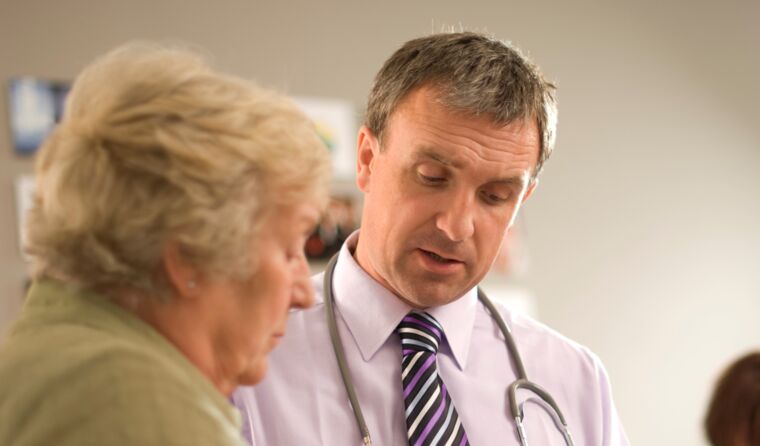 The findings from a survey in the UK suggest GPs are often under too much time pressure to carry out meaningful preventive care.
Three-quarters of GPs surveyed by the UK’s Royal College of GPs (RCGP) said they do not have enough time to carry out preventive healthcare, prompting a call from the RACGP President for policymakers to boost the settings for prevention in Australia.
Only a small minority of the 2316 GP respondents in the UK agreed they had enough time to offer health advice for preventive care, including on vaccination and lifestyle, while 75% disagreed, The Guardian reported on Monday.
RACGP President Dr Michael Wright said the findings will resonate with many Australian GPs, but notes the distinctions between the UK and Australian health systems.
‘In Australia we’re really fortunate in that the vast majority of patients say they do get enough time with their GP and that their GP listens to them,’ he told newsGP.
‘The capitation funding system in the UK has been underfunded for years and they’ve had some interventions, such as physician assistants, which have made it harder for patients to see a GP.
‘That has been a real challenge, and you can see that showing up here.’
However, he said there are clear opportunities in Australia for policymakers to improve the settings for preventive care in this country.
Last year’s RACGP Health of the Nation report, based on contributions from 2416 Australian GPs, warned of a ‘major missed opportunity for our health sector’.
‘There is a strong GP appetite for preventive care, with 83% of GPs wanting to provide more, but only one in three have the time to provide it to their patients,’ it found.
‘Funding gaps, time pressure, and the complexity of patient presentations are key barriers.’
It is a message echoed by Dr Wright, who says ‘the vast majority of GPs want to provide more preventive care’.
‘It’s core to what we do as GPs, keeping people well in the community,’ he said.
‘We have put some additional funding into Medicare, but we really need to look at getting more funding for those longer consults, which is where a lot of the complex care happens as well as preventive care if we need it.
‘Supporting the GP-led team in general practice is also important because a lot of our preventive work is done by other people within our practice team.’
He also pointed to a series of reports that have been released recently that support the college’s call for more investment in longer consultations.
Perhaps most significantly, a draft report from the Medicare Benefits Schedule Review Advisory Committee released this month calls for time-tiered MBS items to ‘equitably support appropriate and varied consultation lengths’.
In the UK, RCGP President and London GP Victoria Tzortziou Brown told The Guardian that while GPs ‘always act on symptoms or findings that need investigation or treatment’, the time to step back to look at their patients’ health more holistically ‘can be squeezed out’
‘That might mean having a proper conversation with someone who smokes. We will of course advise patients about stopping smoking,’ she said.
‘But in a busy consultation there may not be enough time to explore in depth whether they want to stop, what has made it difficult in the past, what concerns they have and what support or treatment might work best for them.
‘It is often the depth of those conversations, rather than simply identifying a risk and giving brief advice, that requires time.’
Like Australia, the UK has put preventive health at the heart of its long-term primary care strategy, with a 10-year plan launched last year promising to ‘reach patients earlier, to catch illness before it spreads and prevent it in the first place, by making the healthy choice the easy choice’.
Log in below to join the conversation.
MBS Medicare preventive care RCGP
newsGP weekly poll
Have you ever found out that a patient has previously failed to disclose their use of GLP-1 medicines to you as their usual GP?