News
RACGP calls for formal recognition of GPs’ role in NDIS assessments
In a submission on proposed changes, it says fully delegating this task to assessors who do not know the patient would be ‘problematic’.
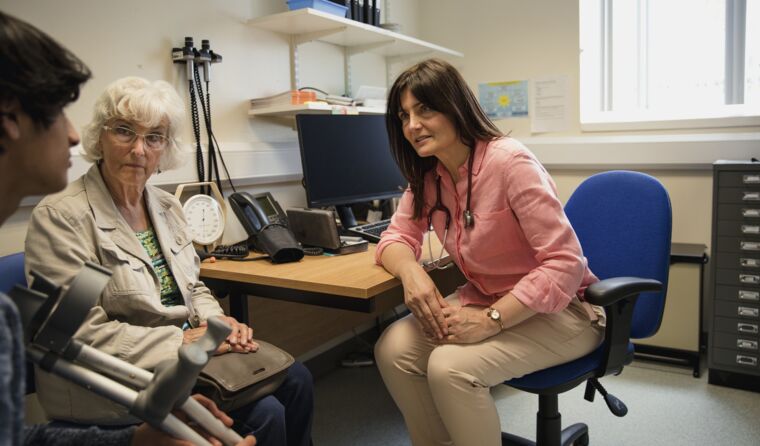 ‘GPs offer a unique broad perspective and can provide oversight of supports and advocate for additional assistance as needed,’ the RACGP says.
The RACGP is urging policymakers to formally recognise the role GPs can play as the Federal Government works on major reforms to National Disability Insurance Scheme (NDIS) assessments.
The college’s view is included in a response to official proposals to change NDIS access as the Government seeks to reduce billions of dollars of spending.
In its submission, the RACGP calls for the National Disability Insurance Agency (NDIA) to formally recognise GPs as medical specialists. Describing GP current involvement in the NDIS as ‘sporadic’, the college notes that GPs’ medical specialist status ‘is not formally recognised by the NDIA’.
‘Opportunities for GPs to provide clinical input to ensure NDIS funding is appropriately allocated often depends on a patient’s ability to self-advocate, and the extent to which NDIS planners understand the GP’s role,’ the submission reads.
‘Appropriately recognising GPs in the new NDIS assessment process will ensure applicants can consult with a trusted health professional who understands their care needs and advise on tailored supports personalised to the patient.
‘Fully delegating this task to assessors who do not know the patient would be problematic.’
The college also warns one-off assessments may lack the right nuance to identify a patient’s needs for support ‘particularly when conditions are fluctuating, episodic and complex’.
‘GPs offer a unique broad perspective and can provide oversight of supports and advocate for additional assistance as needed,’ the RACGP states.
‘They can also help regulate a system that is moving away from diagnosis-based eligibility to assessments based on functional capacity, which opens the door to potential fraud without proper controls.’
Dr Tim Jones, Chair of RACGP Specific Interests Child and Young Person’s Health, said the college’s submission seeks to reflect the role of the GP as the generalist who is likely to be most aware of the context of patients’ healthcare, and any changes affecting them.
‘What we’re really seeking is to make sure that government know that one of the benefits of involving GPs in this process is that they will get very responsive updates about how patients who live with a disability are going,’ he told newsGP.
‘Also, we will reduce the amount of administrative burden if we are embedded in that process with NDIS right from the start.’
The submission also reiterates calls for GPs to be supported in carrying out paperwork tasks, with the Government urged to consider funding the completion of NDIS forms via MyMedicare.
‘With proper funding GPs and practices could receive multiple targeted payments to support the delivery of additional and more comprehensive services beyond relevant fee-for-service MBS items, including care coordination activities between consultations,’ the submission states.
‘A greater role for GPs in the NDIS will contribute to a more sustainable NDIS, ensuring people with disability get the support they need when they need it.
‘It will also deliver better integrated health and disability services, making processes more efficient and accountable as well as reducing fragmentation.’
Meanwhile, it warns of ‘a growing need’ for clearer detail about when children move between the NDIS and the Thriving Kids program which officially began at the start of this month.
Dr Jones, who sits on the Thriving Kids Advisory Group, said a ‘key point’ is that the NDIS will still be needed for some children.
‘While I’m excited about the supports that Thriving Kids will be able to provide as they roll out – and it’s very early days – there is no question there will still be children who require NDIS level individualised supports,’ he said.
‘We need to make sure as part of this process of change that we don’t throw the baby out with the bathwater, that the really good parts of the NDIS are preserved for children with severe and enduring disability.’
The RACGP submission also highlights ‘unique barriers’ faced by Aboriginal and Torres Strait Islander people looking to access disability support, with 11.6% recording ‘a profound or severe limitation in 2022’.
It said cultural safety ‘must also be embedded in any programs and funding streams designed to ease pressure on the NDIS’.
Dr Jones said the process appears to be happening very quickly.
‘As GPs, we need to be very aware of what’s happening in our local areas and what services are and aren’t available because it’s a time of real change for our patients with disability,’ he said.
While the RACGP has previously advocated for a greater role for GPs in carrying out NDIS assessments, Dr Jones believes recent Federal Government departmental re-shuffles could now have an influence.
‘One of the things that’s really given me a lot more optimism is that Health and Disability have now come under the same portfolio with Government,’ he said.
‘And over my engagements with them over the last two years, I have noticed that they’re now far more aware of what a truly integrated system could look like – so I am hopeful that there will be some good change.’
Log in below to join the conversation.
disability NDIS NDIS access
newsGP weekly poll
If the annual cap on GP-referred chronic condition management services increased from five to 12 visits, what impact would it have on your patients?