News
Warning over drugs of dependence telehealth deception
GPs have reported the ‘new trend’, saying practices are being targeted by people looking to obtain medicines via telehealth.
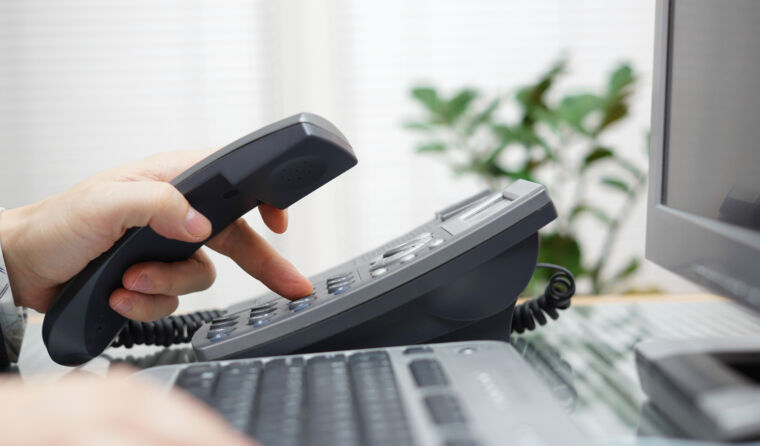 Several clinics say they have been targeted by people attempting to gain prescription drugs using a false identity.
GPs and clinics are being warned to be on their guard after attempts to obtain drugs of dependence by deception have been reported.
RACGP Victoria Chair Dr Anita Muñoz has highlighted ‘a new trend’, describing how people have used telehealth to try and deceive practices into prescribing medications of dependence.
She warns that people are calling practices using common first names and surnames and asking to book a telehealth appointment.
‘If the clinic’s guards are down, and the reception offers to confirm which patient it is (eg “are you Jane Doe from Happy Valley?” instead of asking for date of birth and address), the person can falsely claim to be that existing patient,’ Dr Muñoz said.
‘They then advise the staff that they have a change of telephone number.
‘The telephone consult is conducted with the perpetrator’s own number, and if this occurs with a doctor unfamiliar with the patient, the impersonator can try to obtain drugs of dependence by suggesting a medical urgency is occurring.’
Her warning has led one GP, who wishes to remain anonymous, to share his own story.
‘There was a telephone consultation, purportedly with an existing patient at the clinic,’ he told newsGP.
‘They’d come up with some sort of story that they had some abdominal pain and they had recently been in hospital supposedly for issues with kidney stones and they were after some opioid pain medications.
‘Normally if this was a new patient to the clinic that we don’t know, this would immediately ring alarm bells and I wouldn’t proceed with the call. Most GP clinics will have a policy of not prescribing medications like opioids for a new patient consult.
‘But what was different about the situation was that this person had somehow managed to change the phone number in an existing patient’s record, and so they were able to masquerade as an existing patient.
‘So obviously I was looking at this file, a well-known patient to the clinic, trustworthy, and they came out with this seemingly legitimate story, so I didn’t really have any reason to question [their] bona fides.’
The caller was prescribed the medications, with the deception only identified when the clinic followed up directly with the genuine patient a few days later.
‘I felt quite frustrated that my trust had been betrayed,’ the GP said.
‘As doctors, we don’t typically need to question the honesty of our patients, and I feel that these crooks are taking advantage of this.’
Soon, he realised that his might not be an isolated case, with other doctors sharing ‘pretty much an identical story’ on social media, and he decided to warn others.
‘I would like to communicate to my colleagues that you need to be very careful about people ringing up to change details in patient records,’ he said.
‘You should verify this, preferably in person, and be very careful when seemingly existing patients ring up with stories of wanting medications like this.
‘If it doesn’t check out, you should verify in another way.’
Medical indemnity provider Avant told newsGP it regularly encounters cases ‘where fraudulent representations are made to doctors in attempts to obtain prescriptions for drugs of dependence’.
‘It is unsurprising that increasingly sophisticated and creative methods are being used,’ Avant Medical Advisor Dr Patrick Clancy said.
He said any consultation where prescribing a drug of dependence is being considered ‘must be done carefully and thoroughly’ and noted it is important doctors recognise behaviours that suggest drug misuse.
‘However, identifying this behaviour can be challenging,’ Dr Clancy said
‘It may be difficult to detect when a person is impersonating an existing patient.
‘Doctors should be wary of any telephone-only requests for a new drug of dependence. Generally, if a patient is sick enough to require this, they need to be seen face-to-face.’
Dr Clancy said if there is any suspicion, GPs can ask the patient about their clinical history record, or request to see a photo identification and Medicare card.
‘Doctors and practices could consider introducing a policy that drugs of dependence will not be prescribed for new conditions based on telephone consultations,’ he said.
Dr Muñoz wants all GPs to be aware of the issue and also urged general practices to ensure systems are in place to help address the risk as far as possible. She said there are several ways to do this, while also stressing the importance of recognising the pressure reception staff are under.
‘Consider policies whereby changes of identifiers, including telephone numbers and addresses, are only done in person and with suitable photo identification on hand,’ she said.
Dr Muñoz also suggests all telehealth appointments start with confirmation of identity, including date of birth and address.
‘For a patient who is not well known to you personally, consider how appropriate it is to prescribe a medication of dependence by telehealth, even if that person is ostensibly known to the clinic,’ she said.
Log in below to join the conversation.
cyber security drugs of dependence scams
newsGP weekly poll
Have you ever found out that a patient has previously failed to disclose their use of GLP-1 medicines to you as their usual GP?