News
Obesity rates ‘a worry for our health future’
New data shows one in four Australian kids is living with overweight or obesity, but one expert says GPs are key to halting the rise.
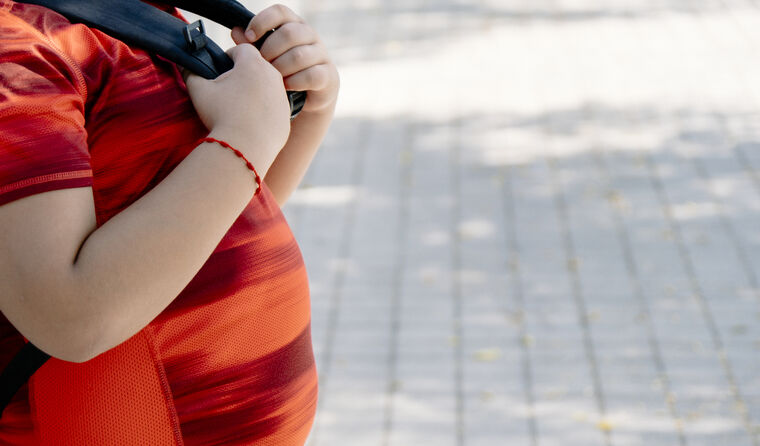 From 1995 to 2024, the rate of overweight and obesity in Australian children has risen from 20% to 27%.
Obesity is becoming more common and starting earlier in people’s lives, according to a new report from the Australian Institute of Health and Welfare (AIHW).
The findings of the Overweight and obesity report, released on Wednesday, reveal concerning rises in childhood overweight and obesity and adult abdominal obesity, in what AIHW spokesperson Amy Young described as ‘a significant health challenge facing Australia’.
It revealed that in 1995, 20% of Australian children were classified as overweight or obese. By 2017–18 this had risen to 25%, and in 2022–24 to 27%.
Chair of RACGP Specific Interests Obesity Management, GP and dietitian Dr Terri-Lynne South told newsGP it is a concern that children are developing obesity earlier than previous generations.
‘That young person is exposed to the consequences of obesity for much longer, and therefore we are actually starting to see those at-risk children developing early onset type two diabetes, fatty liver disease, and even cardiovascular disease at a much younger age,’ she said.
‘Therefore, the downstream domino effects of that is going to be seen in the next 20–30 years, which is a worry for our health future.’
The AIHW report says that in 2024, overweight and obesity overtook tobacco as the leading risk factor for ill health and death and was responsible for an estimated 19,000 deaths – 10% of the year’s total.
The other ‘worrying’ statistic for Dr South in the AIHW report was the rise in adult abdominal obesity.
While obesity rates in adults have remained steady at 67% from 2017–18 to 2022–24, adult abdominal obesity rose from 41% to 48% during the same period, almost doubling the 1995 rate of 25%.
‘That is worrying, because we do know it’s actually the abdominal obesity that is the major risk factors for the metabolic complications of obesity,’ Dr South said.
‘Looking beyond BMI, I don’t think this is reassuring. It’s actually more alarming that it is the excess adiposity around the middle.’
Dr South believes environmental changes over recent decades is ‘the biggest influence’ on the spike in childhood obesity and overweight, but that epigenetics are also beginning to play a role.
‘If we see an adult living with obesity, we know that both through shared genetics and environment that their children will be at higher risk,’ she said.
Adding to children’s vulnerability is the absence of regular health checks after their four-year immunisations, which Dr South would like to see change.
‘We need to be getting more into the once-a-year healthy child checkup with regards to looking at all parameters; not just weight and growth, but also nutrition and dentition and physical activity and sleep,’ she said.
She says children are also at risk due to their reliance on a parent or carer to identify a potential weight problem – or at risk of not coming to a GP’s attention at all unless they are brought in for another health issue.
‘Adults can recognise that their higher body weight or obesity might be a health problem and seek help, but children are reliant on other people in their life to actually identify that and help from a management point of view,’ Dr South said.
‘My concern is that children and adolescents who are obese tend to become obese adults. If they actually have obesity as a child or adolescent, it doesn’t spontaneously remit; the natural history of that condition is to worsen without intervention.’
If an adult visits their GP for help to manage overweight or obesity, Dr South says she ‘would hope’ GPs would also sensitively ask the patients about their broader family’s health as an opportunity for a potential ‘whole-of-family intervention’.
‘We do know that interventions of the parent – typically, the parent who is doing most of the grocery shopping, as well as the meal preparation – will be having a huge influence on the family,’ she said.
‘We also know that having some interventions at that family level, it not just helps the parent, but helps the children, and vice versa.’
Discussions with families can be couched sensitively ‘in terms of regards to health and growth’ to avoid potential stigmatising and shame, Dr South says, and to gauge a family’s dynamic.
‘It’s helpful to get a sense of the understanding and perceptions of the parent themselves as well, understanding that often you’re also treating a dyad, a parent–child dyad in this context,’ she said.
‘Potentially parents bring their own internal concerns and preconceptions and past experiences onto the child in front of them, which can either be a positive or a negative.’
Dr South says GPs play a strong role in primary prevention by helping to create ‘healthy family units’.
‘We can be talking about health for a young person from the moment they are conceived, with healthy pregnancies, better antenatal care with regards to nutrition, appropriate gestational weight gain,’ she said.
‘We’ve got a role in regards to secondary prevention, so a person, whether they’re young or an adult, might have a higher body weight; let’s help them not develop something called clinical obesity.’
Log in below to join the conversation.
abdominal obesity adolescent obesity child obesity epigenetics intervention obesity
newsGP weekly poll
Do you think MBS item changes put in place over the past two years have simplified Medicare compliance responsibilities for general practice?